Generator safety
Generator Carbon Monoxide Safety: The Rules That Prevent Deaths
Carbon monoxide has no smell, no color and no taste, and portable generators are one of the leading sources of it. Every major safety authority agrees on the same placement rules.
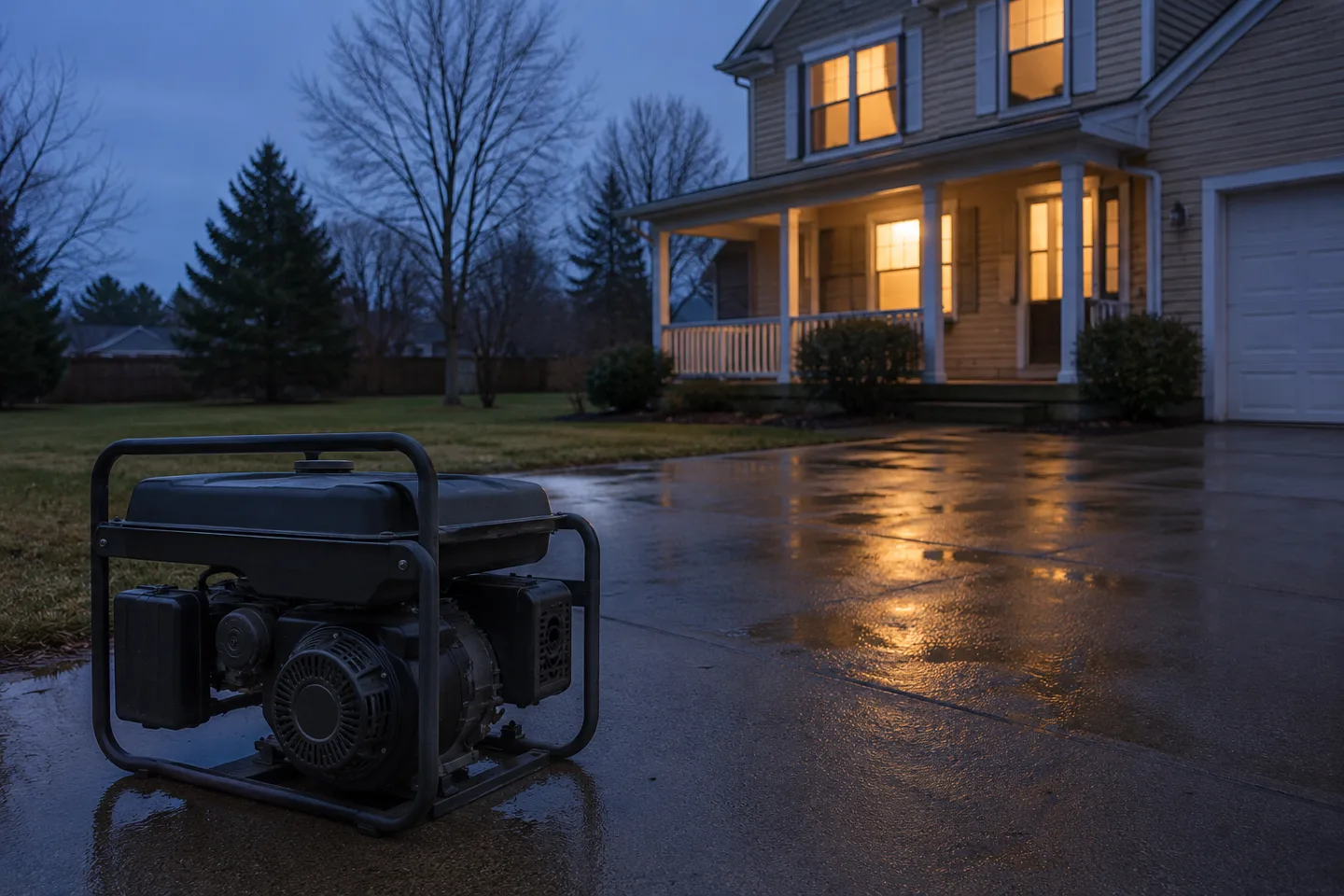
Carbon monoxide (CO) is an odorless, colorless gas that kills without warning. Portable generators are one of the leading sources of CO poisoning deaths in the United States, particularly in the aftermath of storms and other power outages. Understanding the rules that govern safe generator use is not optional, it is the difference between surviving an outage and becoming a statistic.
Why Generators Are So Dangerous
A portable generator produces carbon monoxide as a byproduct of burning fuel. According to the CDC, generators can produce CO at levels more than 100 times higher than the amount considered safe. The gas displaces oxygen and impairs the blood's ability to carry it, meaning victims can lose consciousness before they realize anything is wrong. Because CO has no smell, color, or taste, there is no sensory warning before symptoms begin.
The Consumer Product Safety Commission (CPSC) reports that portable generators are responsible for more than half of all CO poisoning deaths from consumer products. The NFPA has documented that generator-related CO deaths spike sharply in the days immediately following major storms, when power outages drive widespread generator use in residential settings.
The Non-Negotiable Placement Rules
Where you run a generator is the single most important safety decision you make. Every major safety authority, the CDC, CPSC, OSHA, and the Red Cross, aligns on the same core placement rules.
Never run a generator indoors. This means never inside a house, apartment, garage, basement, crawl space, or shed. CO can accumulate to lethal concentrations within minutes in an enclosed space.
Never run a generator in an attached garage, even with the garage door fully open. The CDC warns that CO from a garage can migrate into the living areas of a home rapidly, even when ventilation appears adequate.
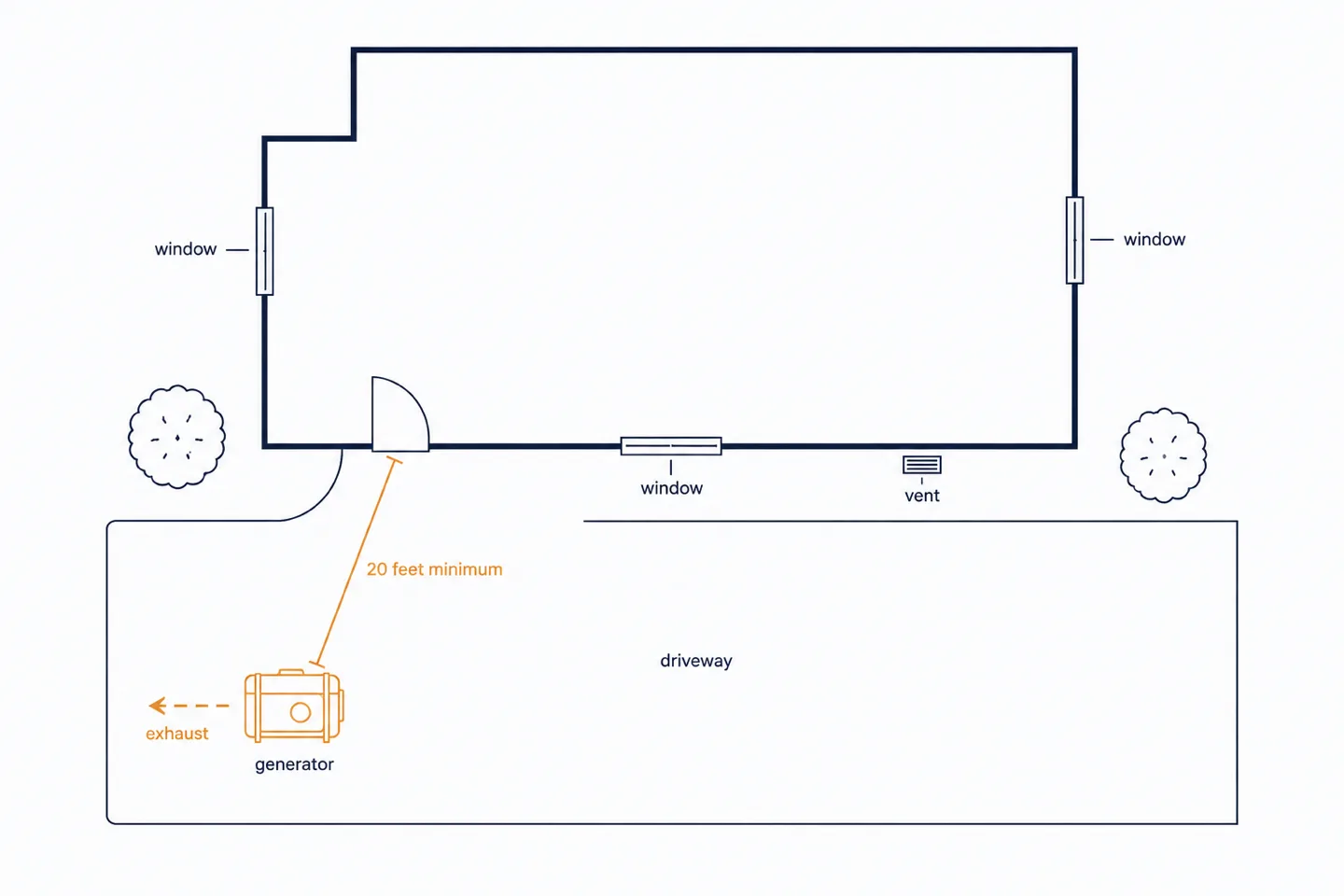
Maintain a minimum distance of 20 feet from any door, window, or vent. The exhaust must be directed away from any opening through which CO could re-enter the structure. The CPSC specifies 20 feet as the minimum safe operating distance.
Do not run a generator under an awning, porch, or carport. Partial enclosures trap CO just as effectively as fully enclosed spaces.
Point the exhaust away from the building and any neighboring structures. Wind can redirect CO back toward a home even at distances that would otherwise be adequate.
Carbon Monoxide Detectors: Your Last Line of Defense
Every home that uses a generator during a power outage must have working carbon monoxide detectors. The CPSC recommends installing CO detectors on every level of the home, including outside each sleeping area. Battery-powered or battery-backup CO detectors are essential because a power outage disables plug-in models.
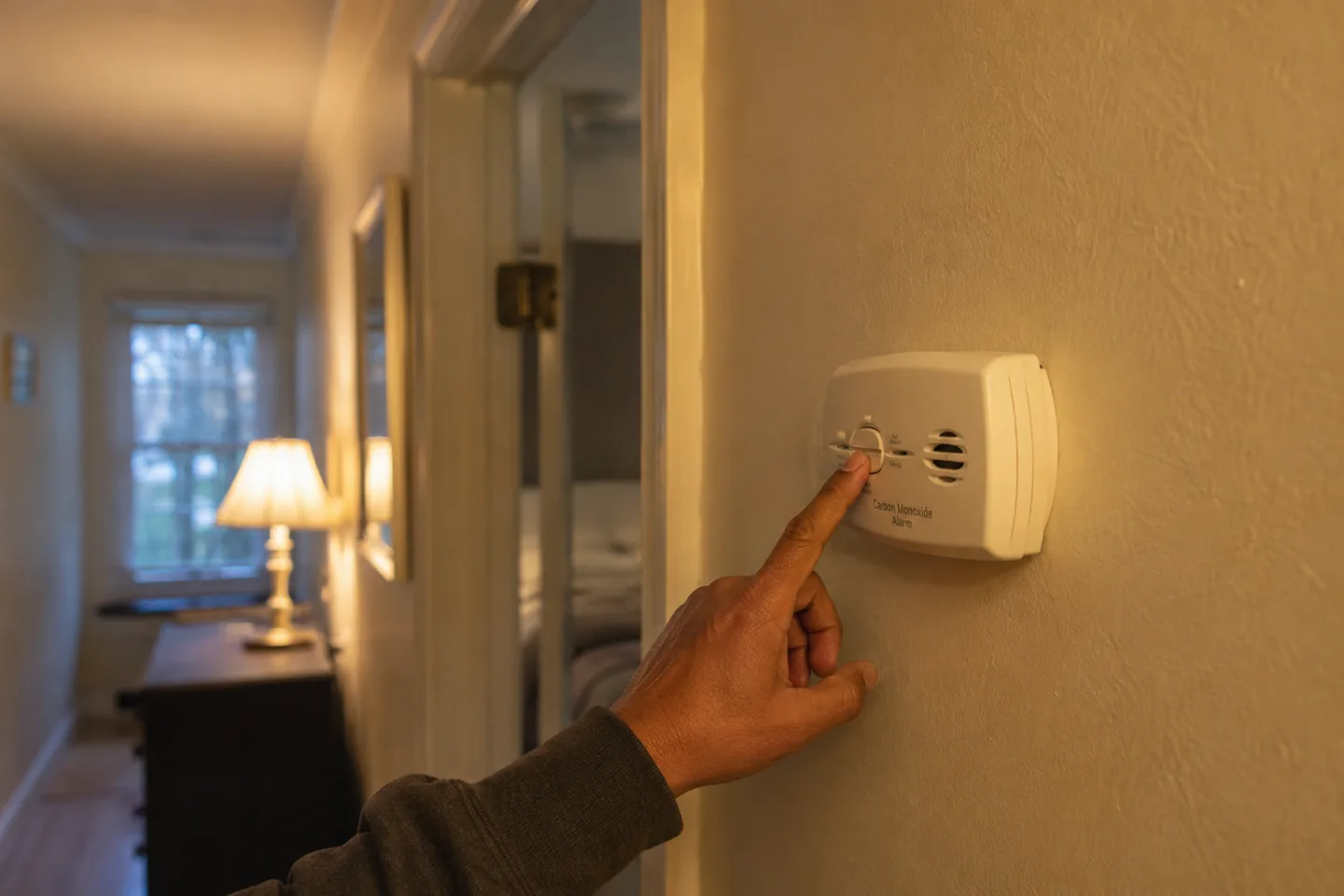
The Red Cross advises testing CO detectors before storm season and replacing batteries at least once a year. CO detectors should be replaced entirely every five to seven years, or according to the manufacturer's instructions, whichever comes first.
If a CO detector sounds:
- Move everyone, including pets, outside immediately.
- Do not stop to gather belongings.
- Call 911 from outside the home.
- Do not re-enter the building until emergency responders have declared it safe.
Recognizing CO Poisoning Symptoms
Because CO is undetectable by the senses, recognizing physical symptoms is critical. The CDC identifies the most common symptoms of CO poisoning as headache, dizziness, weakness, upset stomach, vomiting, chest pain, and confusion. Symptoms are often described as flu-like, but unlike the flu, CO poisoning does not cause fever.
CO poisoning is particularly dangerous during sleep. Victims can die without ever waking. If multiple people in the same building develop flu-like symptoms simultaneously, CO poisoning should be suspected immediately.
If you suspect CO poisoning: Get everyone out of the building immediately and into fresh air. Call 911. Do not re-enter the building for any reason.
Fueling and Startup Safety
Generator misuse during fueling is a secondary but significant source of injury. Observe the following rules every time:
- Never refuel a running generator. Allow the engine to cool for at least 15 to 20 minutes before adding fuel. Fuel spilled onto a hot engine can ignite immediately.
- Store fuel safely. Store gasoline in approved containers in a cool, well-ventilated area away from living spaces and heat sources. Do not store fuel inside the home.
- Use the correct fuel type. Using the wrong fuel type can damage the generator and create additional safety hazards.
- Do not overfill the fuel tank. Fuel expands as it warms and can overflow, creating fire risk.
OSHA advises that generators should be operated only by people familiar with their manual and with generator safety procedures generally.
Electrical Safety and the "Backfeed" Hazard
Generators also pose electrical hazards that can endanger utility workers and neighbors.
Never plug a generator directly into a wall outlet, a practice known as "backfeeding." Backfeeding sends electricity back through your home's wiring and onto the utility line, where it can electrocute utility workers restoring power and can damage neighbors' equipment. The CPSC explicitly warns against this practice.
Use a transfer switch if you connect a generator to your home's electrical system. A licensed electrician must install a transfer switch. This is the only safe method of connecting a generator to home wiring.
Use heavy-duty, outdoor-rated extension cords. Extension cords must be rated for the wattage of the devices plugged into them. Undersized cords can overheat and start fires.
Do not operate a generator in wet conditions unless it is specifically designed for wet-weather use. Water and electricity are a lethal combination; use a canopy or other weather protection that does not restrict airflow.
Special Considerations After Storms
The period immediately after a major storm or hurricane is the highest-risk window for generator CO deaths. The FEMA U.S. Fire Administration notes that most generator-related CO fatalities occur in exactly this scenario: residents using generators to power their homes during extended outages.
The HHS and the Red Cross both recommend developing a power outage plan before storm season begins, one that includes knowing where your generator will be placed, confirming that CO detectors work, and identifying the nearest evacuation point if CO is detected.
After a storm, be especially alert to neighbors who may be running generators unsafely. CO can travel between units in apartment buildings, condominiums, and densely packed neighborhoods. If you smell exhaust or suspect a neighbor is running a generator indoors, contact local emergency services.
A Quick-Reference Safety Checklist
| Rule | Requirement |
|---|---|
| Generator placement | At least 20 feet from any door, window, or vent |
| Indoor use | Never, includes garages, basements, and sheds |
| CO detectors | Every level of home; outside each sleeping area |
| Detector type during outage | Battery-powered or battery-backup |
| Electrical connection | Transfer switch only; no backfeeding |
| Refueling | Engine off and cooled; approved containers only |
| Wet conditions | Do not operate unless generator is rated for wet use |
The Bottom Line
The rules around generator carbon monoxide safety exist because people died before those rules were written. The CDC, CPSC, OSHA, Red Cross, NFPA, and FEMA have all studied generator-related fatalities and reached the same conclusions: keep generators outside and far from openings, install and maintain CO detectors, and never backfeed into home wiring. None of these rules is complicated. All of them save lives when followed and cost lives when ignored.
Sources
- Centers for Disease Control and Prevention, Carbon Monoxide Poisoning: Prevention Guidance
- U.S. Consumer Product Safety Commission, Portable Generator Safety
- Occupational Safety and Health Administration, Using Portable Generators Safely
- American Red Cross, Generator Safety
- National Fire Protection Association, Portable Generators
- FEMA U.S. Fire Administration, Portable Generator Fire and Carbon Monoxide Safety
Blackout Ready is not affiliated with, or endorsed by, any agency cited here. Guidance can be updated after we publish; check the source for the current version.
Last reviewed: August 11, 2026